Hailong Qu中文
Profile image from Hailong Qu’s Google Scholar page

Hailong Qu

PhD student in Civil Engineering at Chongqing University

AI for ScienceEngineering agentsWind engineering

Hailong Qu
中文

About

I study how multimodal agents reason about space and use professional engineering software. My work in AI for Science also uses machine learning to predict offshore wind turbine loads, indoor air quality and the strength of structural materials.

Selected research

All publications
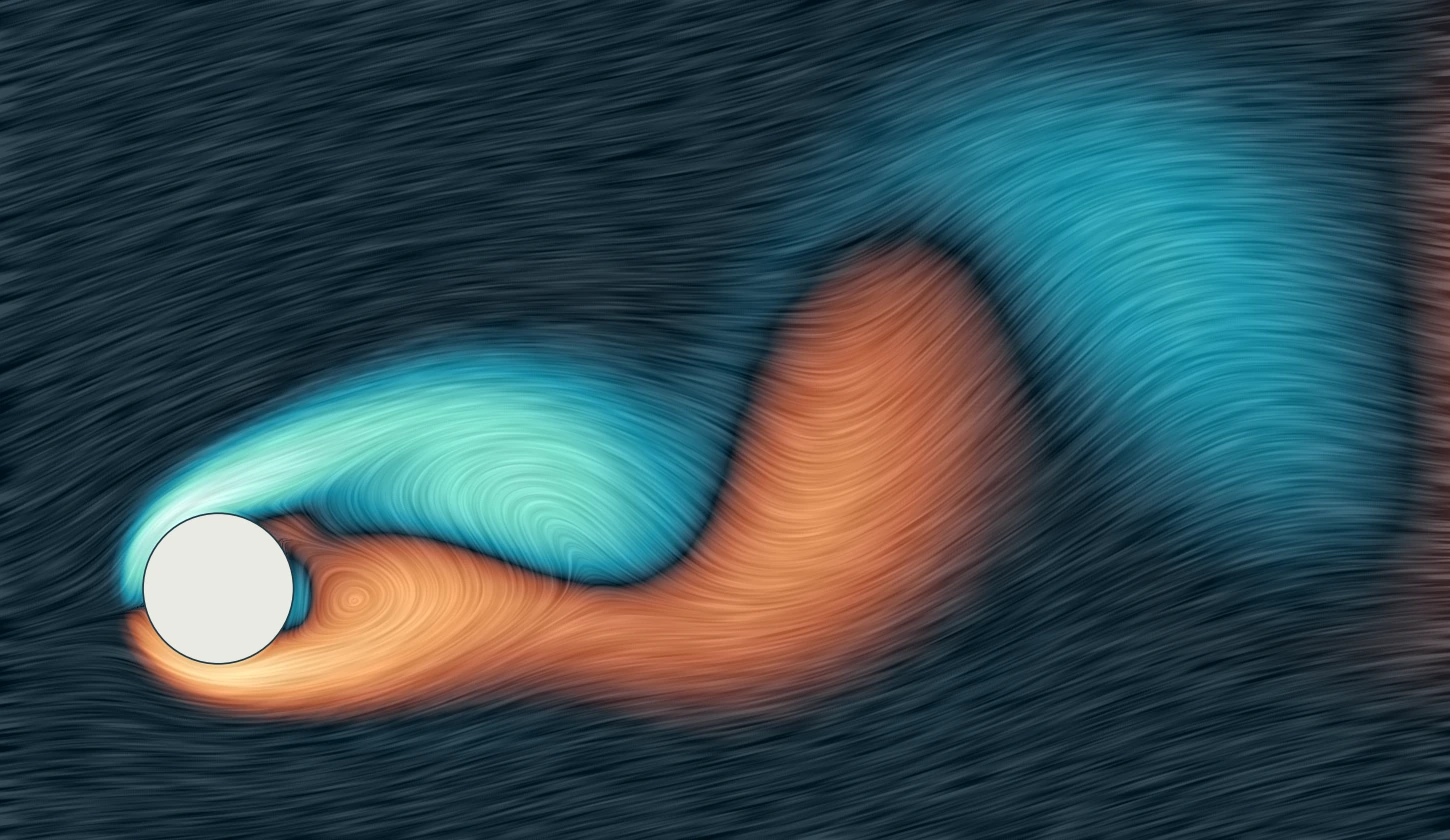
Alternating teal and amber vortices form downstream of a cylinder in EngiWorld’s OpenFOAM reference solution.

Engineering software · OpenFOAM cylinder wake

EngiWorld

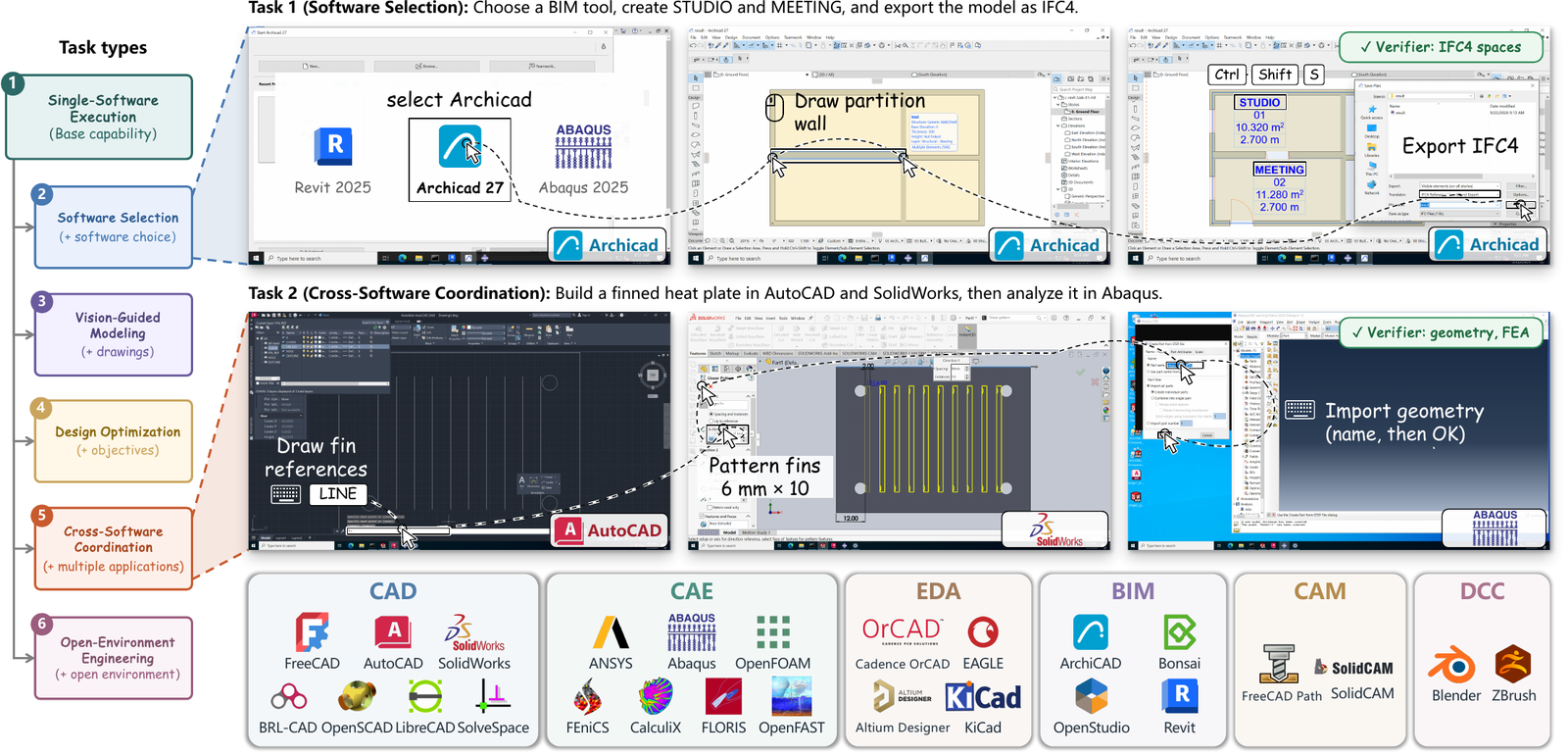
We built 1,301 tasks across 26 professional applications to test whether agents can produce engineering files that meet the task requirements.

Exploded view of SpatialWorld’s two-floor Maze3D level 23. An orange route crosses the upper floor and returns to the goal below. Dashed lines join the stairs.

Multimodal agents · Maze3D reference route

SpatialWorld

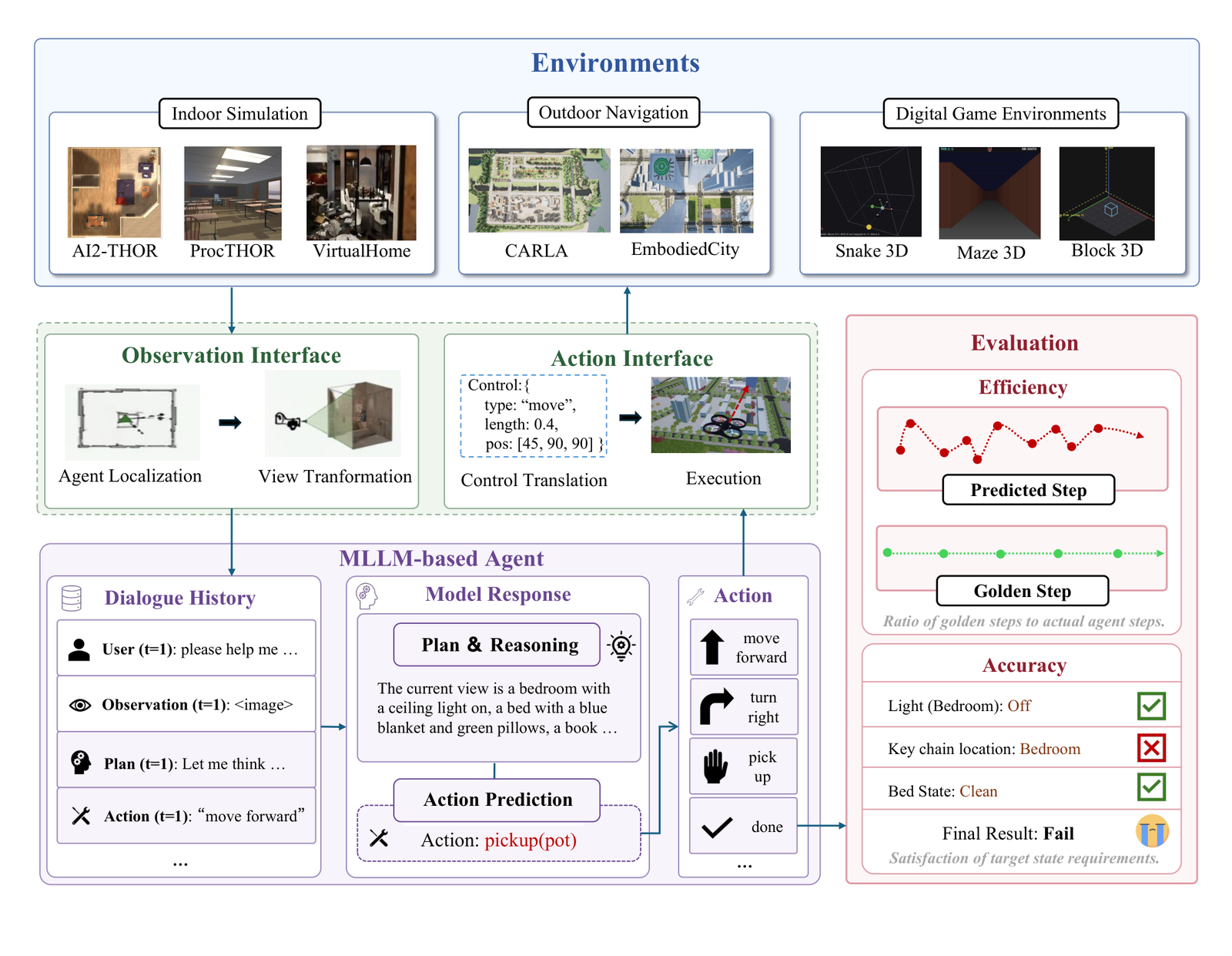
Across 760 interactive tasks, agents use first-person views to explore unfamiliar environments, navigate and manipulate objects.

Publications

Engineering agents & spatial reasoning

Does a completed simulation run mean a usable urban wind result for AI agents?

On 30 OpenFOAM tasks with independent references, UrbanWind-AgentBench checks whether metrics reported by AI agents can be recomputed from raw solver outputs.

Zhongke Qu, Yunwei Zhang, Junwei Su, Yabin Zhang, Chengwei Li, Qingxiang Shui, Hailong Qu, Zhaolin Gu

arXivCo-corresponding authorPublic preprint

Micius-Flash: Lightweight Agentic Intelligence for Engineering

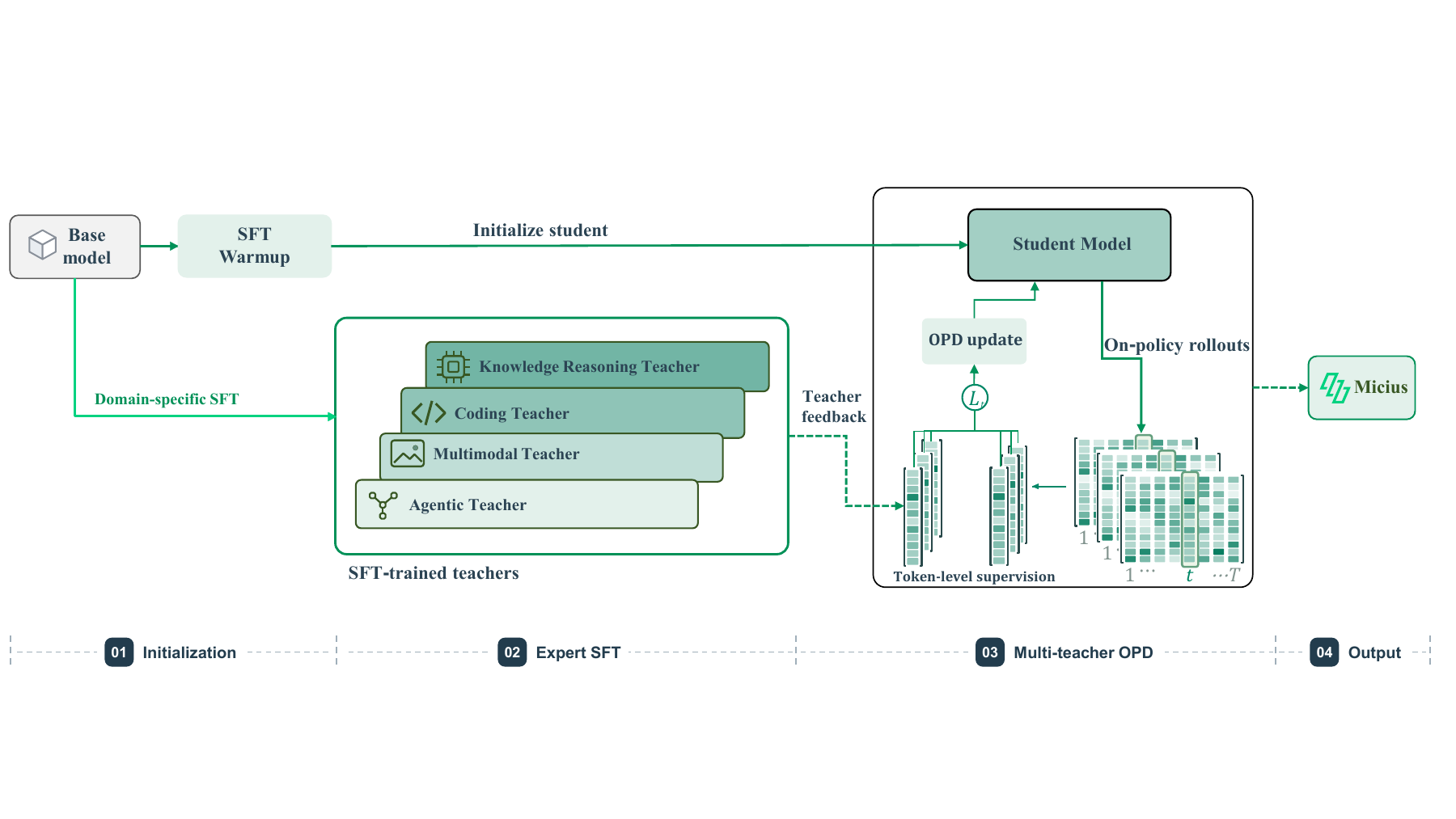
Micius-Flash connects a 27B multimodal model to engineering tools. I designed and tested tasks in which the model built a CAD hole-pattern plugin and reproduced Blender modeling workflows in PySide6.

Hongcheng Gao, Weiheng Li, Yipeng Wei, …, Hailong Qu, …, Zeqiang Wang

arXivCo-authorPublic preprint

During post-training the student generates its own responses and tool-use trajectories. Each of four teachers provides feedback in its specialty, covering reasoning, coding, multimodal understanding, and tool use. Figure 4
During post-training the student generates its own responses and tool-use trajectories. Each of four teachers provides feedback in its specialty, covering reasoning, coding, multimodal understanding, and tool use. Source

EngiWorld: What Can Frontier Agents Deliver in Professional Engineering Environments?

I co-designed the benchmark, ran model experiments and evaluated the engineering files produced at each stage.

Hongcheng Gao*, Hailong Qu*, Yu Lei*, et al.

arXivCo-first authorPublic preprintCited by 2

EngiWorld uses tasks such as building-model export and cross-software analysis of a finned plate to evaluate agents in six engineering domains. Figure 1
EngiWorld uses tasks such as building-model export and cross-software analysis of a finned plate to evaluate agents in six engineering domains. Source

SpatialWorld: Benchmarking Interactive Spatial Reasoning of Multimodal Agents in Real-World Tasks

I helped design the benchmark, ran experiments and evaluated how agents navigated and manipulated objects across eight simulated environments.

Hongcheng Gao*, Hailong Qu*, Jingyi Tang, et al.

arXivCo-first authorPublic preprintCited by 8

Agents use first-person observations to act in indoor, street and game environments. The benchmark checks their final state and the number of actions taken. Figure 1
Agents use first-person observations to act in indoor, street and game environments. The benchmark checks their final state and the number of actions taken. Source

Wind energy engineering

Predicting power and fatigue loads of yawed large offshore wind turbine based on cross-scale transfer learning

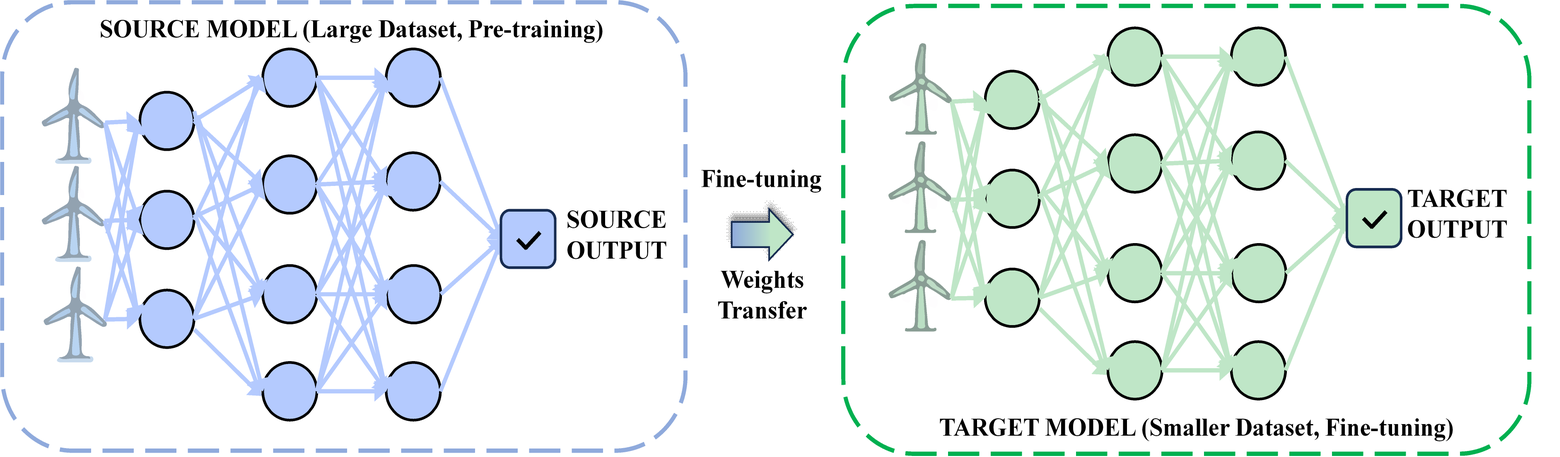
A model pretrained on 5 MW turbine simulations was transferred to 15 MW turbines. With 40% of the target-domain data, it matched an XGBoost baseline trained on 80%.

Hailong Qu, Tianzhen Wei, Guoqing Huang, et al.

Ocean Engineering, 362, 126286First authorPublishedXinrui tier 1 · TOPCited by 2

Six networks are pretrained on 5 MW turbine simulations and fine-tuned on 15 MW data. One predicts power and the other five each predict a fatigue load. Figure 2
Six networks are pretrained on 5 MW turbine simulations and fine-tuned on 15 MW data. One predicts power and the other five each predict a fatigue load. Source
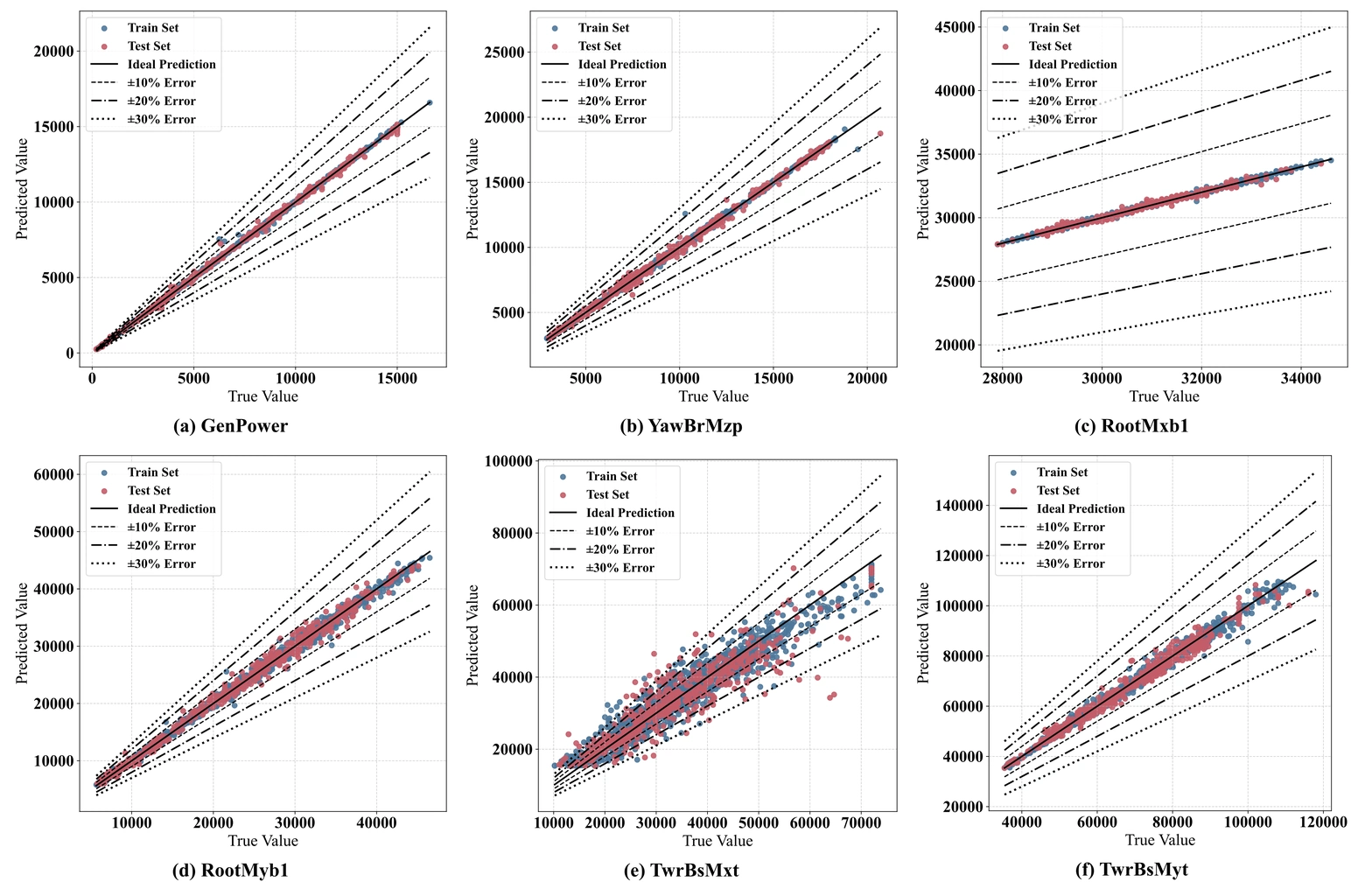
Experimental results · Figure 8
Predicted and simulated power and fatigue loads for the 15 MW target turbine. Blue points are training cases and red points are test cases. Figure 8
Predicted and simulated power and fatigue loads for the 15 MW target turbine. Blue points are training cases and red points are test cases. Source

Structural engineering & composite materials

A machine learning model based on GAN-ANN data augmentation for predicting the bond strength of FRP-reinforced concrete under high-temperature conditions

We augmented high-temperature pull-out test data using a GAN, compared six regression models and used SHAP to interpret bond-strength predictions.

Hailong Qu, Tianyu Hu, Jiting Qu, Woubishet Zewdu Taffese.

Composite Structures, 369, 119321First authorPublishedXinrui tier 1 · TOPCited by 43

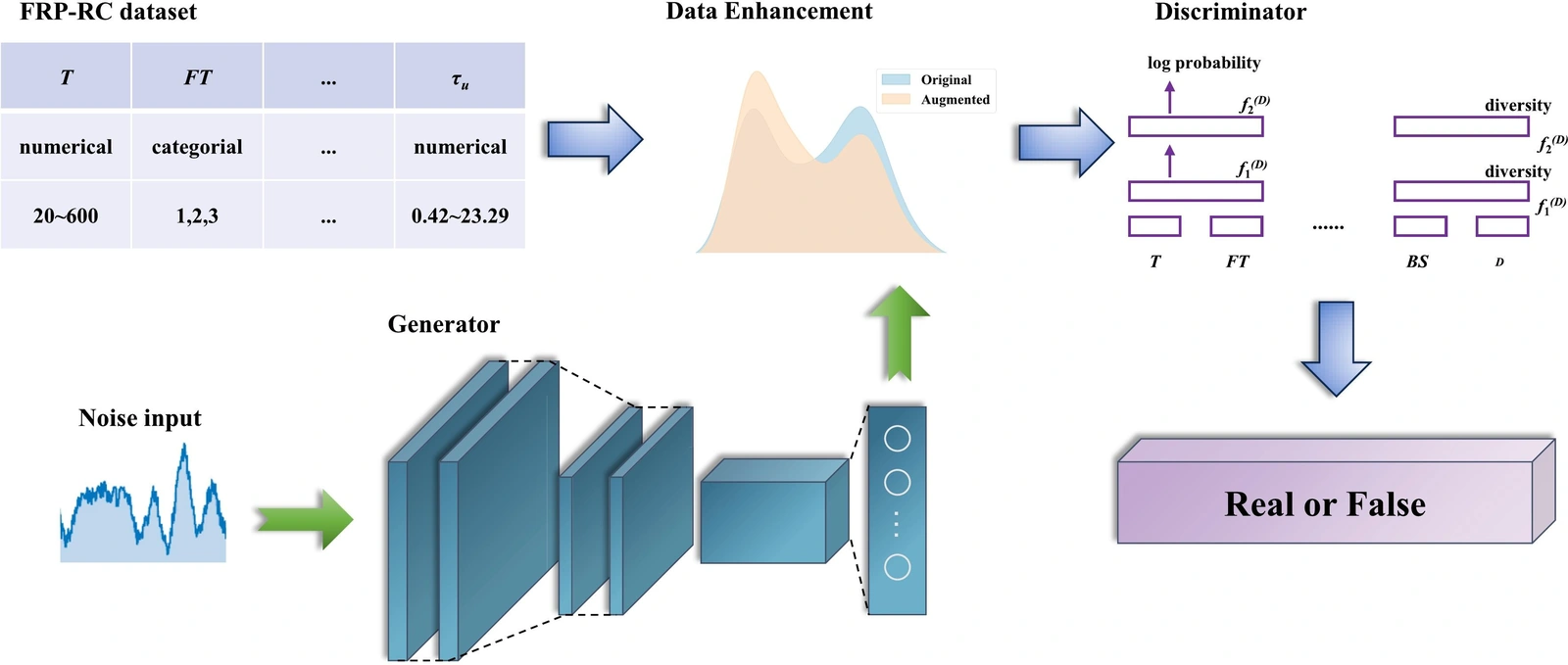
GAN data augmentation for FRP–concrete bond tests. The generator creates synthetic samples from noise, and the discriminator distinguishes them from experimental records. Figure 1
GAN data augmentation for FRP–concrete bond tests. The generator creates synthetic samples from noise, and the discriminator distinguishes them from experimental records. Source
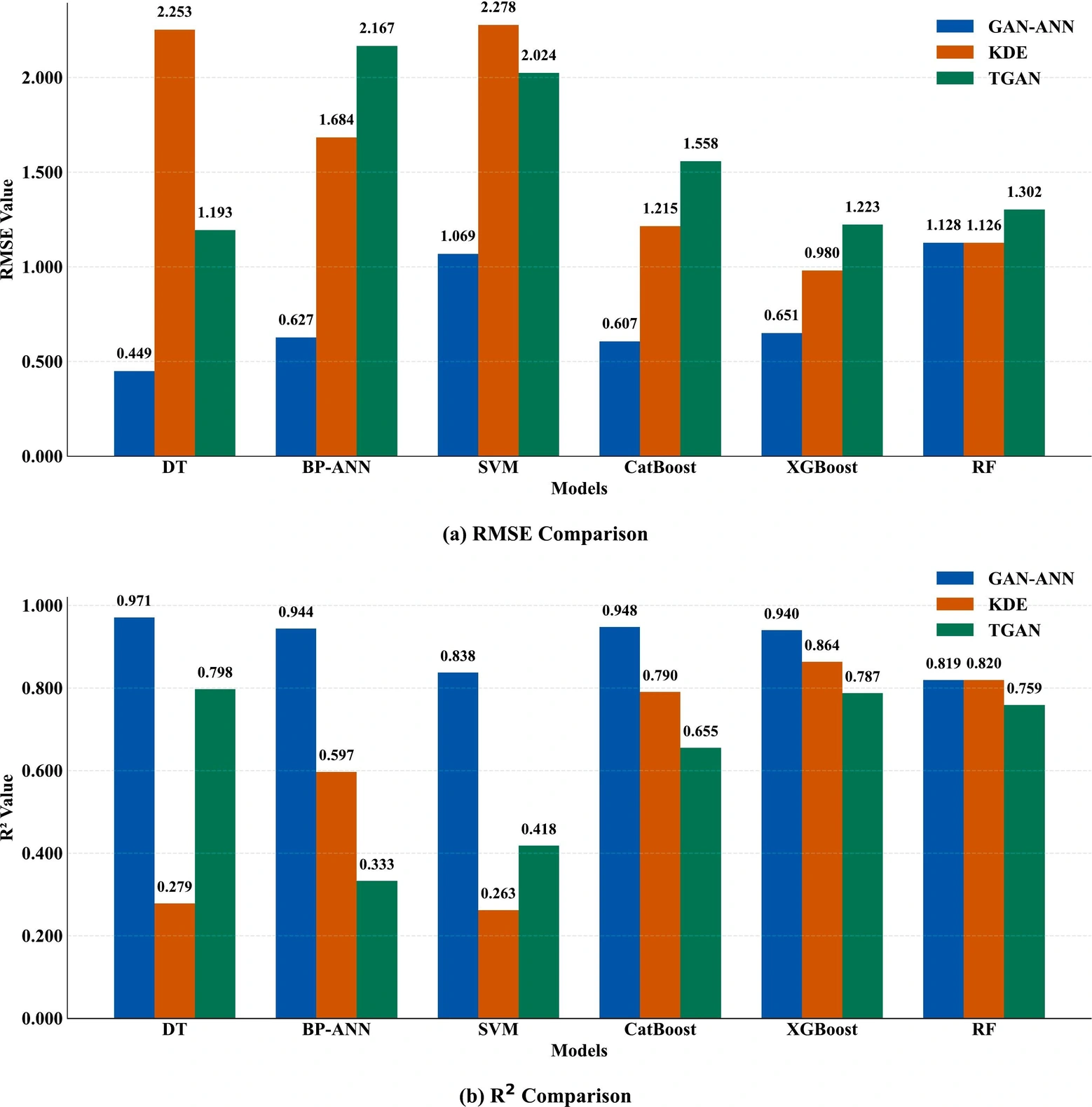
Experimental results · Figure 16
Test-set RMSE and R² for six bond-strength models after adding 30% synthetic data generated using GAN–ANN, KDE or TGAN. Figure 16
Test-set RMSE and R² for six bond-strength models after adding 30% synthetic data generated using GAN–ANN, KDE or TGAN. Source

Prestressed UHPC Beam Flexural Capacity Prediction Improvement with Constraint-Guided Neural Networks

Geometric, reinforcement and material-strength constraints guide a neural network that predicts the flexural capacity of prestressed ultra-high-performance concrete beams.

Hailong Qu, Le Teng, Yanping Zhu, Zhongke Qu, Hantao Wu.

International Journal of Bridge Engineering, Management and Research, 2(3), 214250023First authorPublishedCited by 6

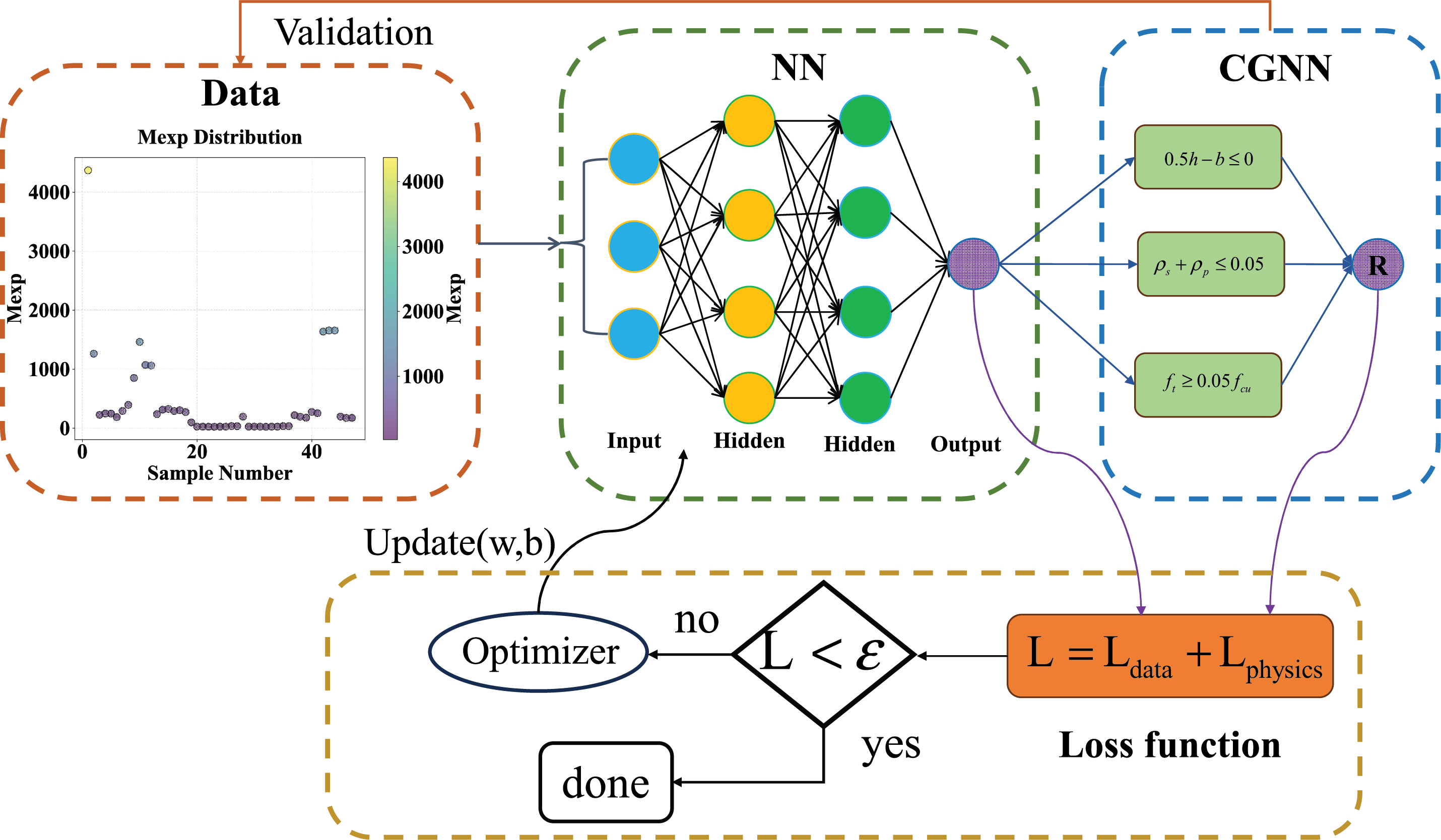
The constraint-guided network predicts the flexural capacity of prestressed UHPC beams. Its training loss combines data-fitting error with constraints on cross-sectional geometry, reinforcement ratio, and the relationship between tensile and compressive strength. Figure 2
The constraint-guided network predicts the flexural capacity of prestressed UHPC beams. Its training loss combines data-fitting error with constraints on cross-sectional geometry, reinforcement ratio, and the relationship between tensile and compressive strength. Source
Experimental results · Figure 7
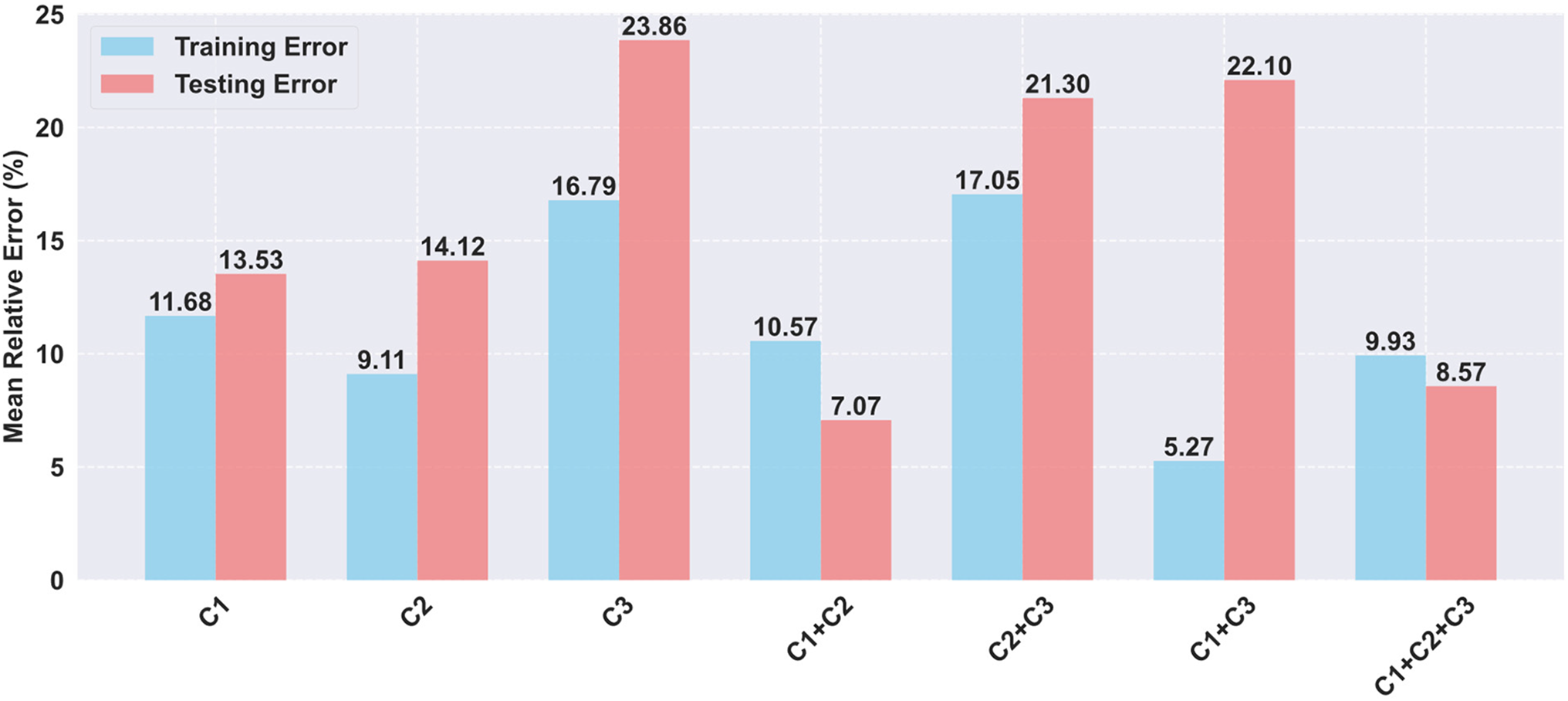
Mean relative training and test errors for seven combinations of physical constraints in prestressed UHPC beam capacity prediction. Figure 7
Mean relative training and test errors for seven combinations of physical constraints in prestressed UHPC beam capacity prediction. Source

Built environment & air quality

Probabilistic short-term forecasting of spatially heterogeneous classroom CO₂ fields with graph-spectral increment diffusion

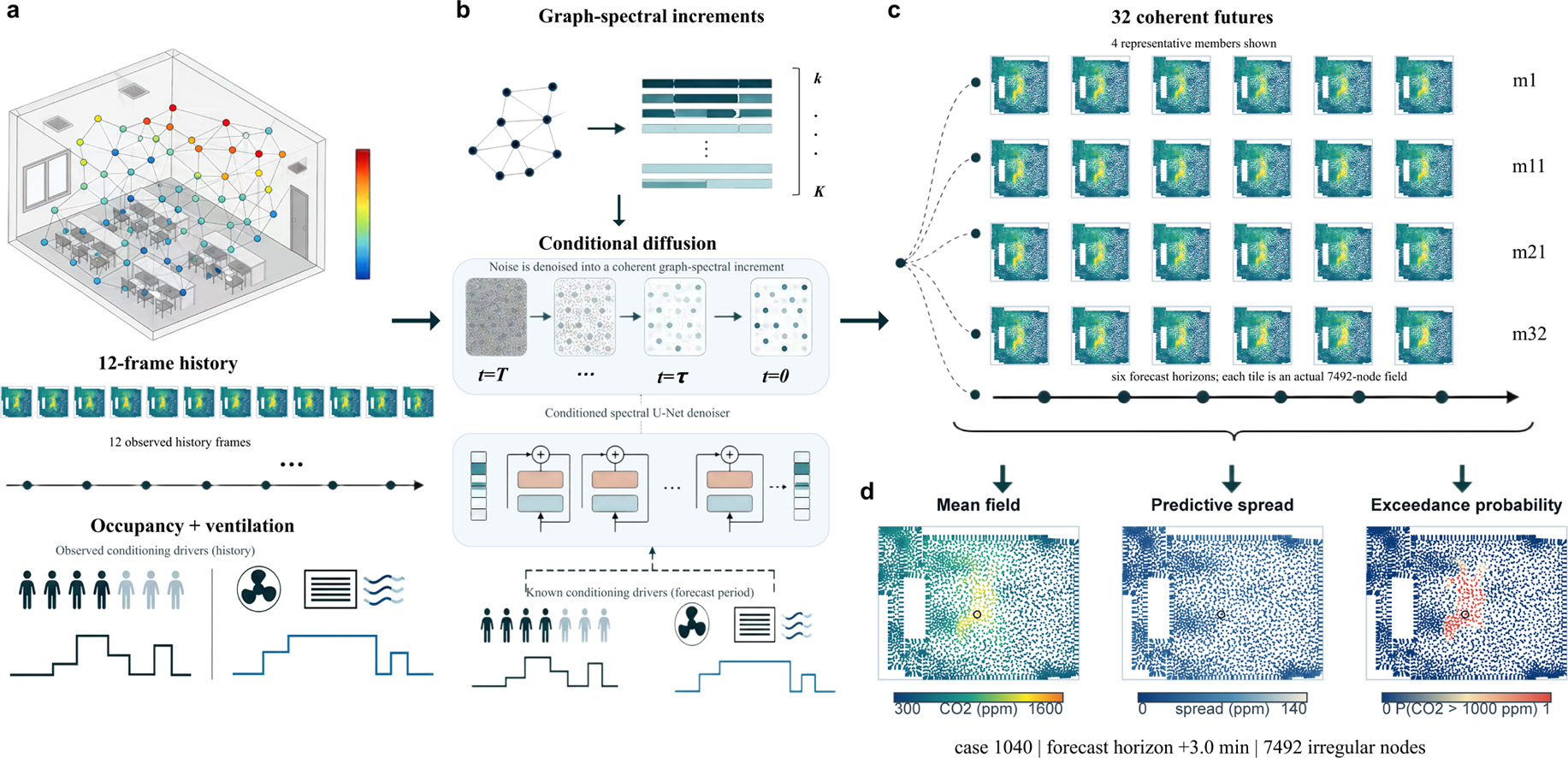
Graph-spectral increment diffusion generates possible future classroom CO₂ fields, with forecasts of the mean, predictive spread and threshold-exceedance probability. First published online in 2026.
Hailong Qu, Zebin Yang, Feng Wang, Zhengyang Zhang, Zhaolin Gu, Zhongke Qu

Energy and Buildings, 375, 118501First authorPublished

Graphical abstract. Observed CO₂ history and occupancy/ventilation inputs condition graph-spectral diffusion to generate coherent future fields and summarize forecast uncertainty. Graphical abstract
Graphical abstract. Observed CO₂ history and occupancy/ventilation inputs condition graph-spectral diffusion to generate coherent future fields and summarize forecast uncertainty. Source

Experience

Jun – Nov 2026

Zhiman AI

LLM Researcher

Co-designed EngiWorld, ran model experiments and evaluated the files agents produced in professional engineering software.

Designed and tested software-development tasks for Micius-Flash, including a CAD hole-pattern plugin and a PySide6 implementation of Blender modeling workflows.

Education

  1. 2025 – present

    Chongqing University

    PhD student in Civil Engineering

  2. 2022 – 2025

    Dalian University of Technology

    Master’s in Civil Engineering

  3. 2018 – 2022

    China University of Mining and Technology

    Bachelor’s in Civil Engineering